Some games ask you to sit down. Others ask you to get up. Walking games are the second kind: they turn the walking you do in real life into progress. A trip to the shop, the stairs at work or an after-dinner stroll all move the game forward.
Two families: GPS games and step games
Almost every game you play by walking falls into one of two groups:
- Location-based games. The game map is the real map: you have to go to specific places, and the game needs GPS and a connection the whole time. They’re very social, but they depend on where you live — a small village has far less going on than a city centre — and they drain the battery.
- Pedometer games. The game doesn’t care where you are, only how much you’ve walked. Your phone already counts steps, and the game turns them into a resource. It makes no difference whether you walk in the countryside, around a mall or on a treadmill.
Step games have one clear advantage: the game doesn’t need to be open. You walk with the phone in your pocket as usual and, when you sit down, your progress is waiting for you.
DustFall: a wasteland RPG that moves when you do
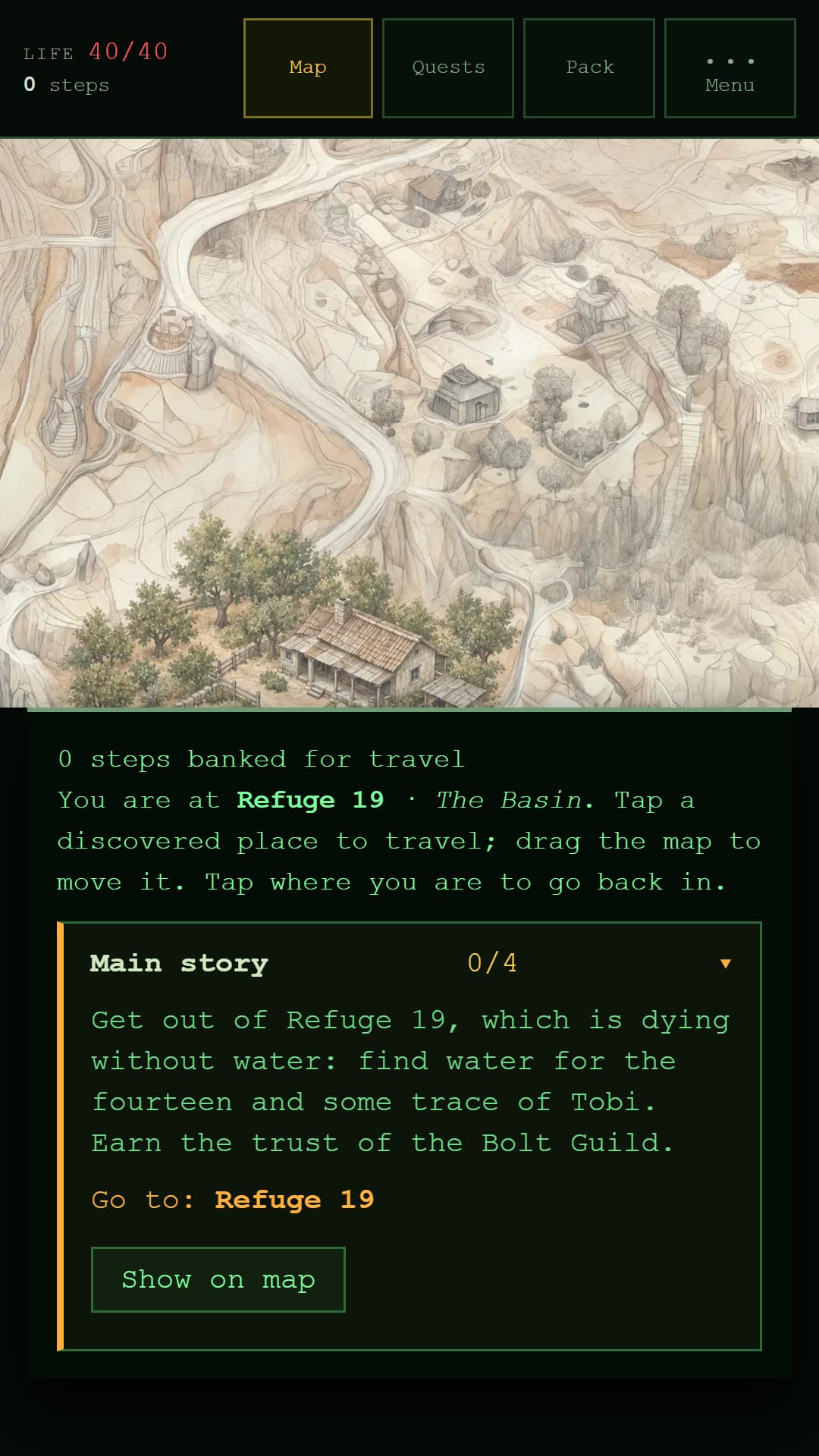
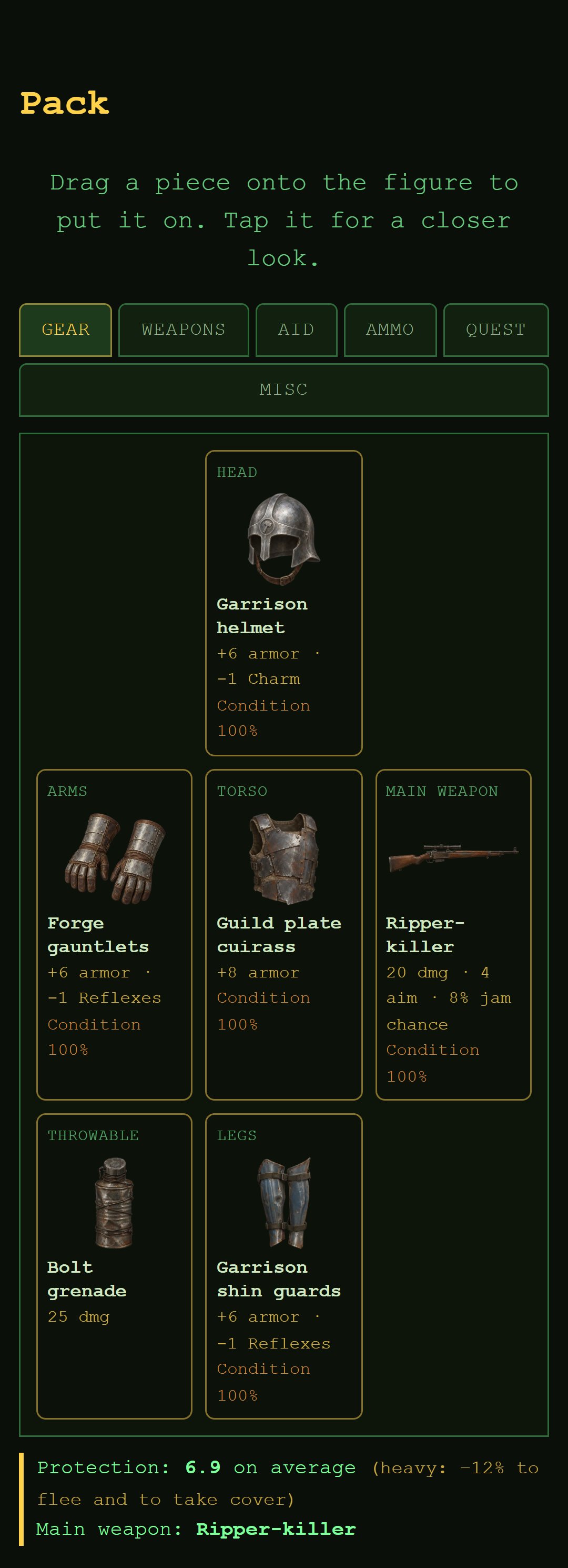
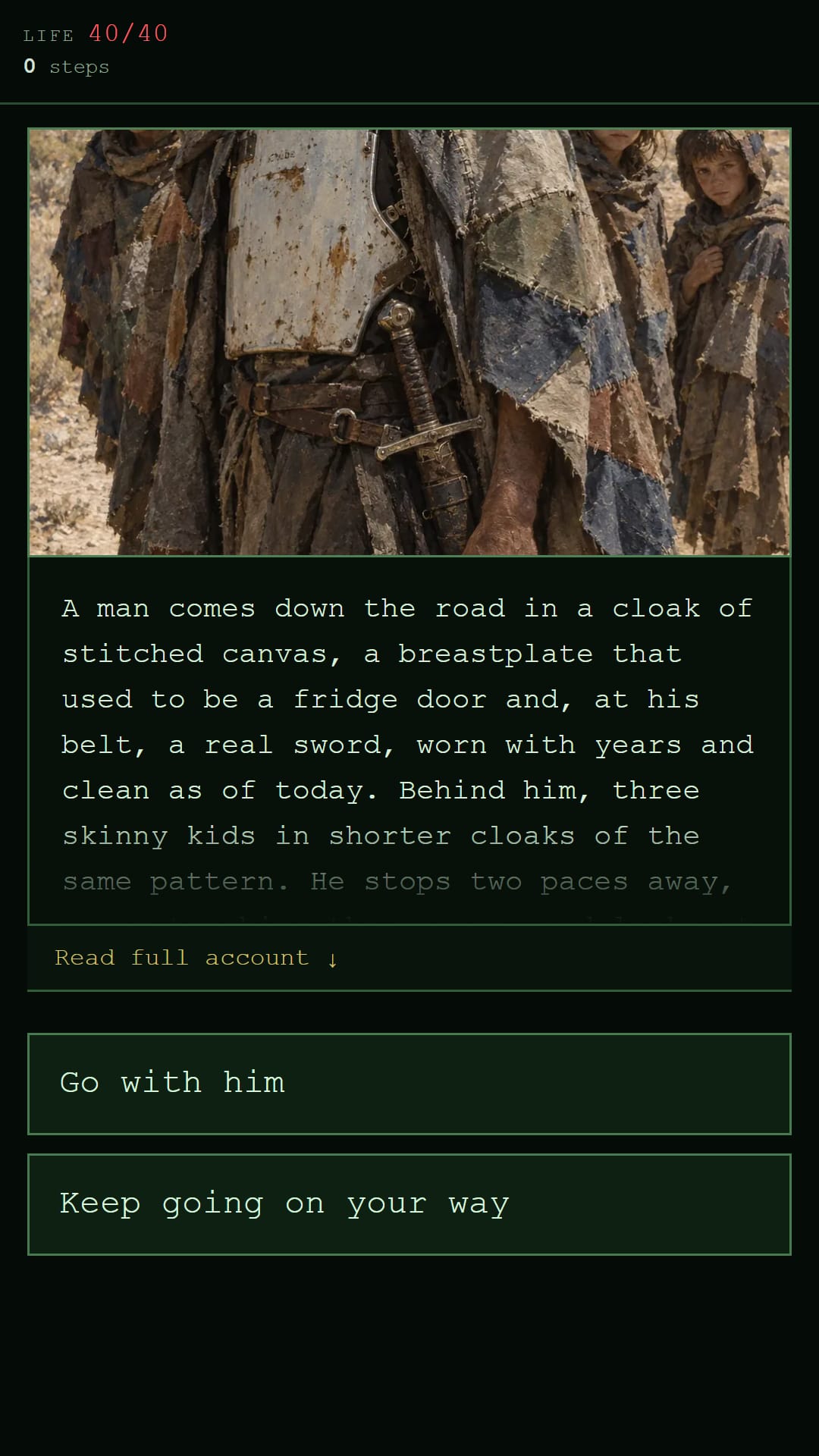
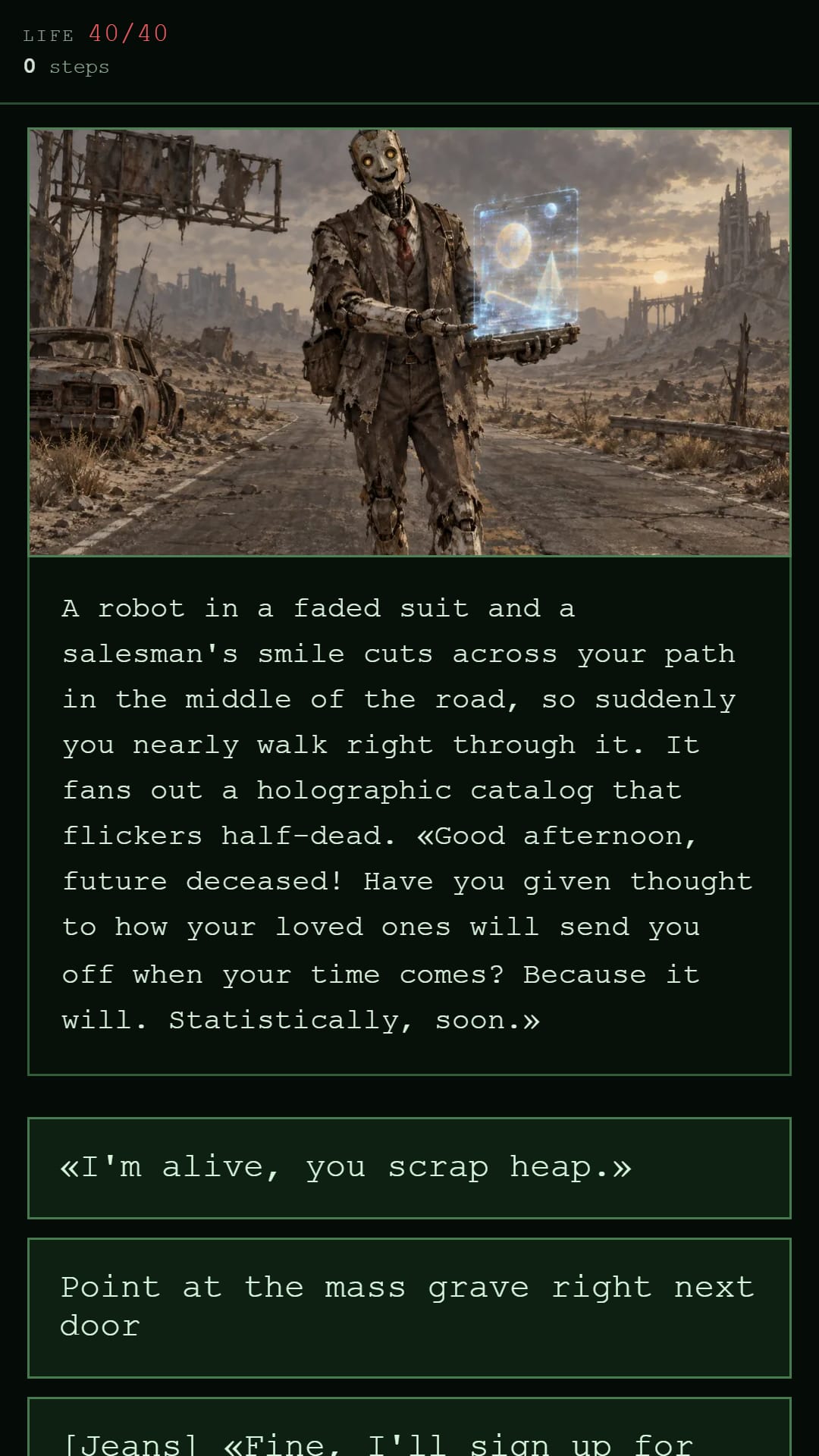
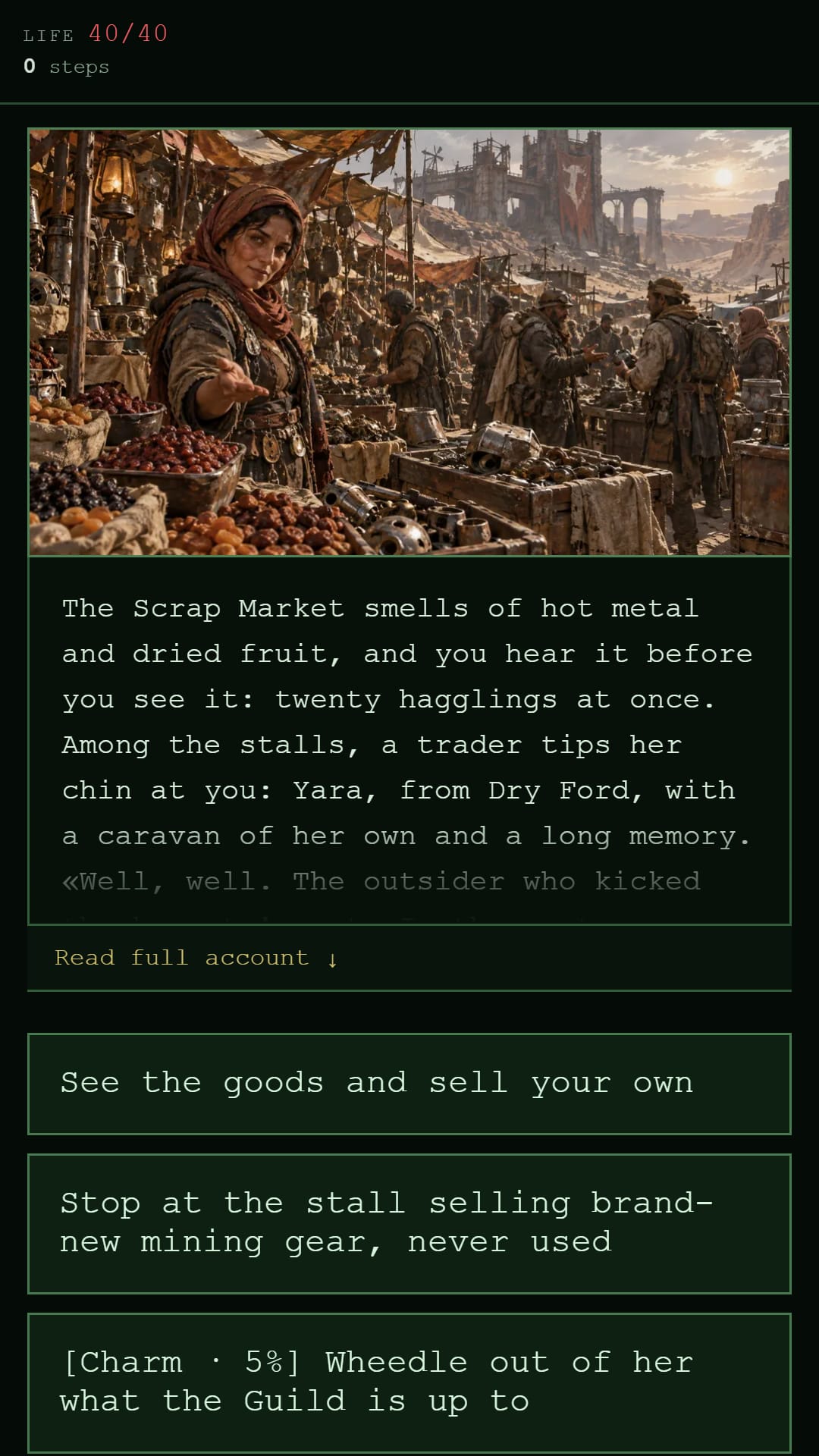
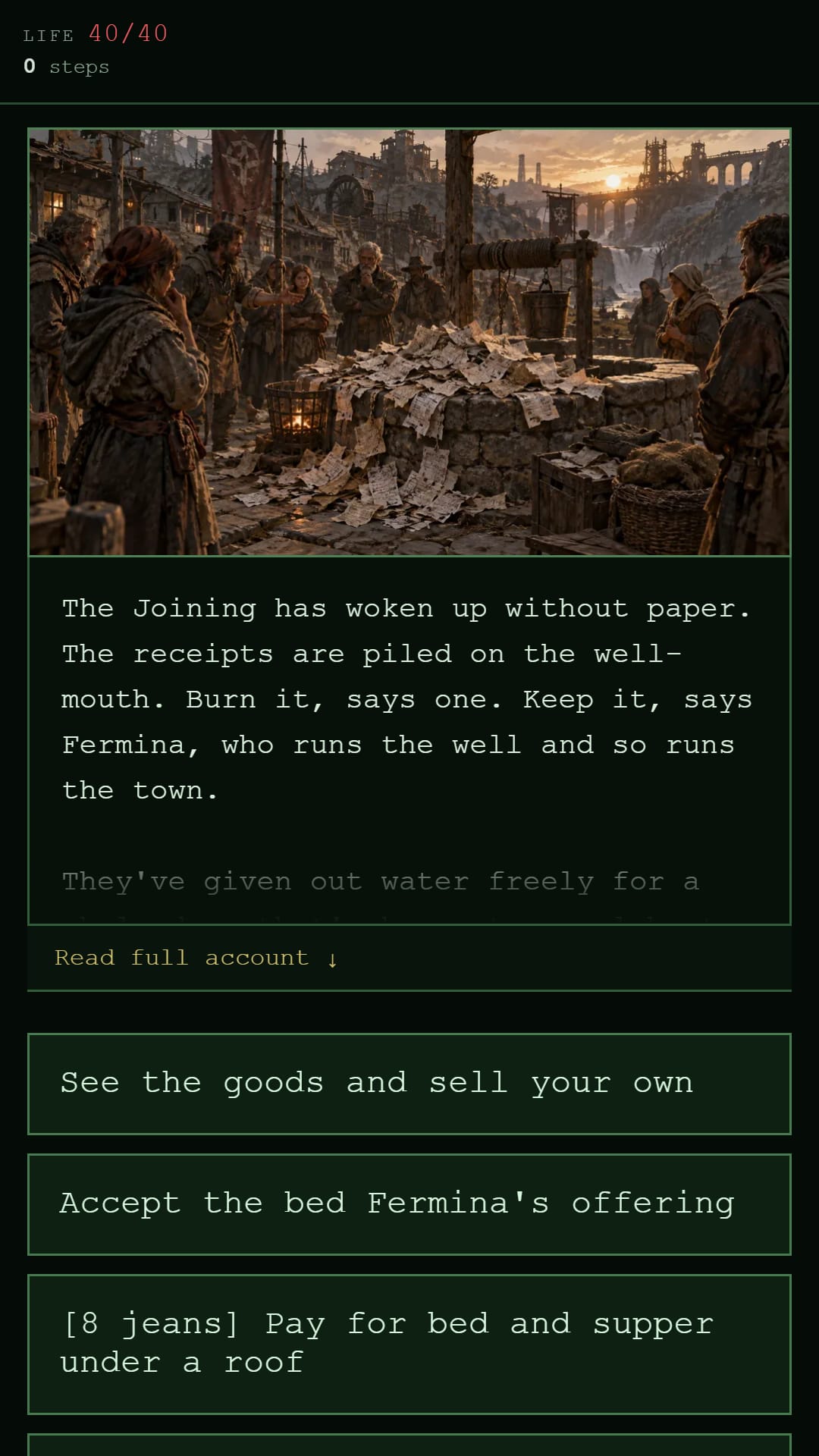
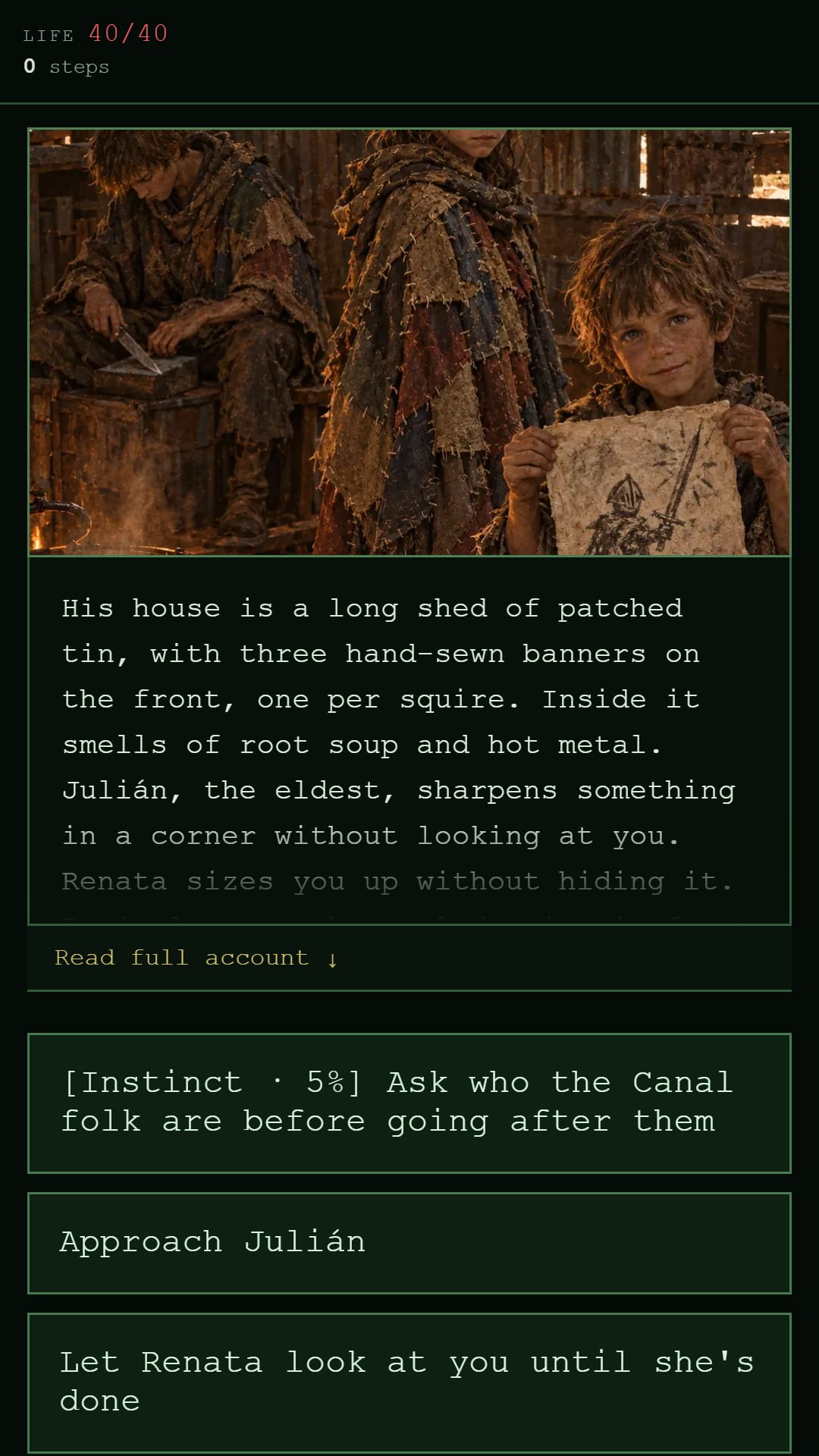
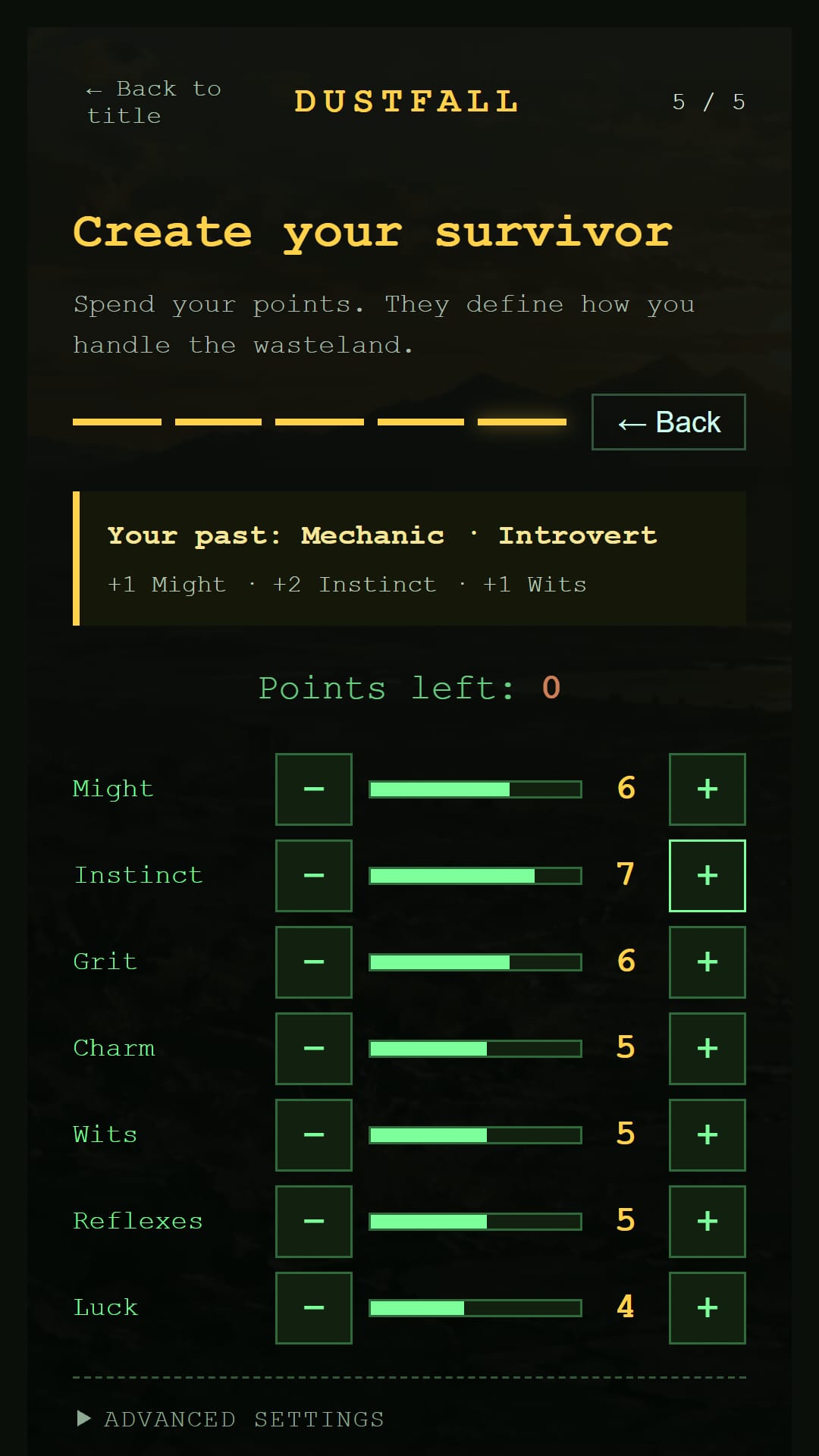
DustFall is a narrative role-playing game in the second group. You’re born in Refuge 19, underground, and head out into the wasteland to look for water. The pedometer counts your real steps in the background, the steps are banked, and you spend them to travel across the map. Every stretch of road has encounters, towns, markets and choices.
What sets it apart from a step counter with pictures is that there’s a real story behind it:
- 13 different endings, depending on what you decide along the way.
- 5 acts and 56 places on the map, with over 750 illustrations and music.
- Survivor creation with a background, a temperament and seven attributes that change how you handle each situation.
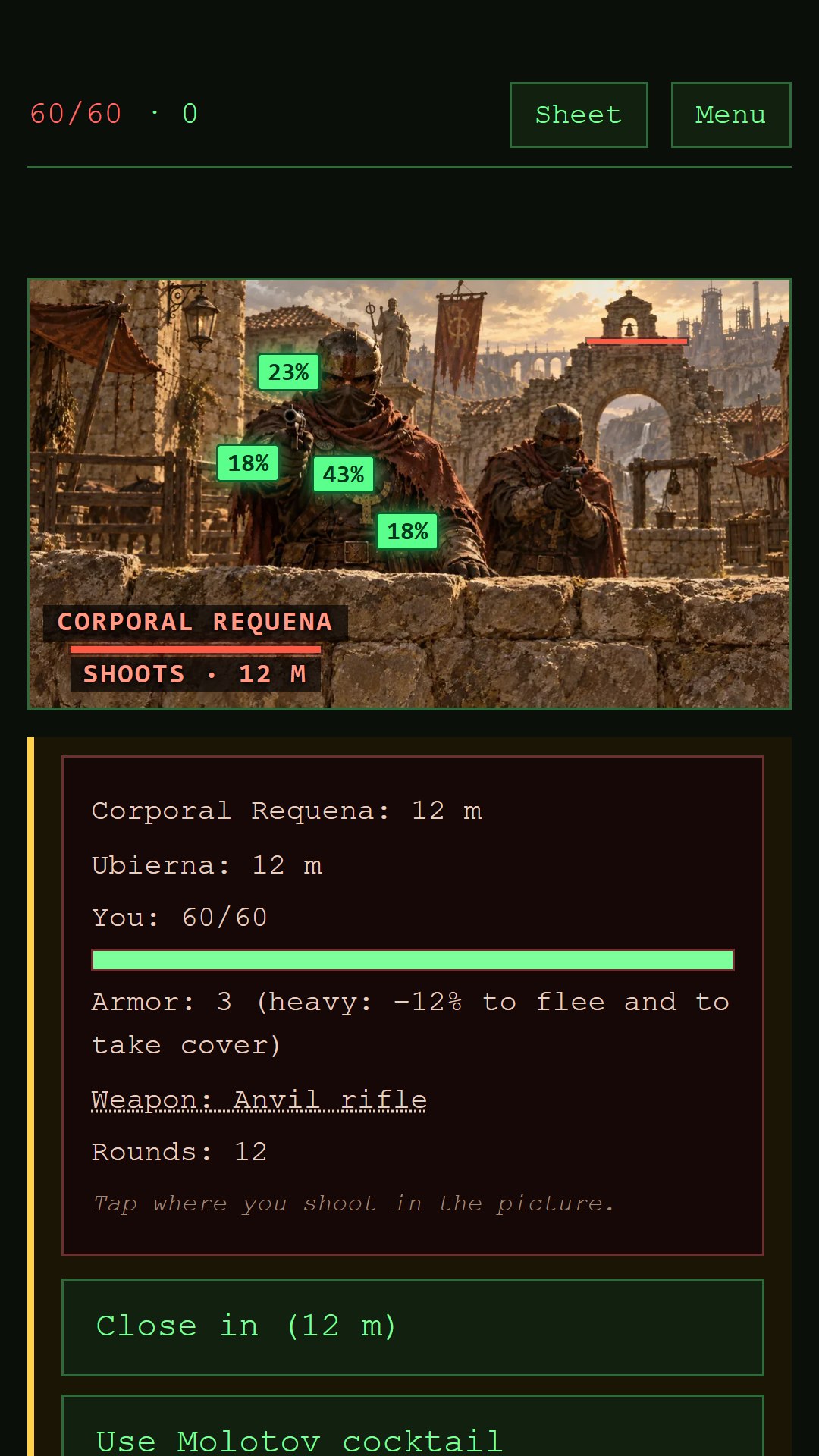
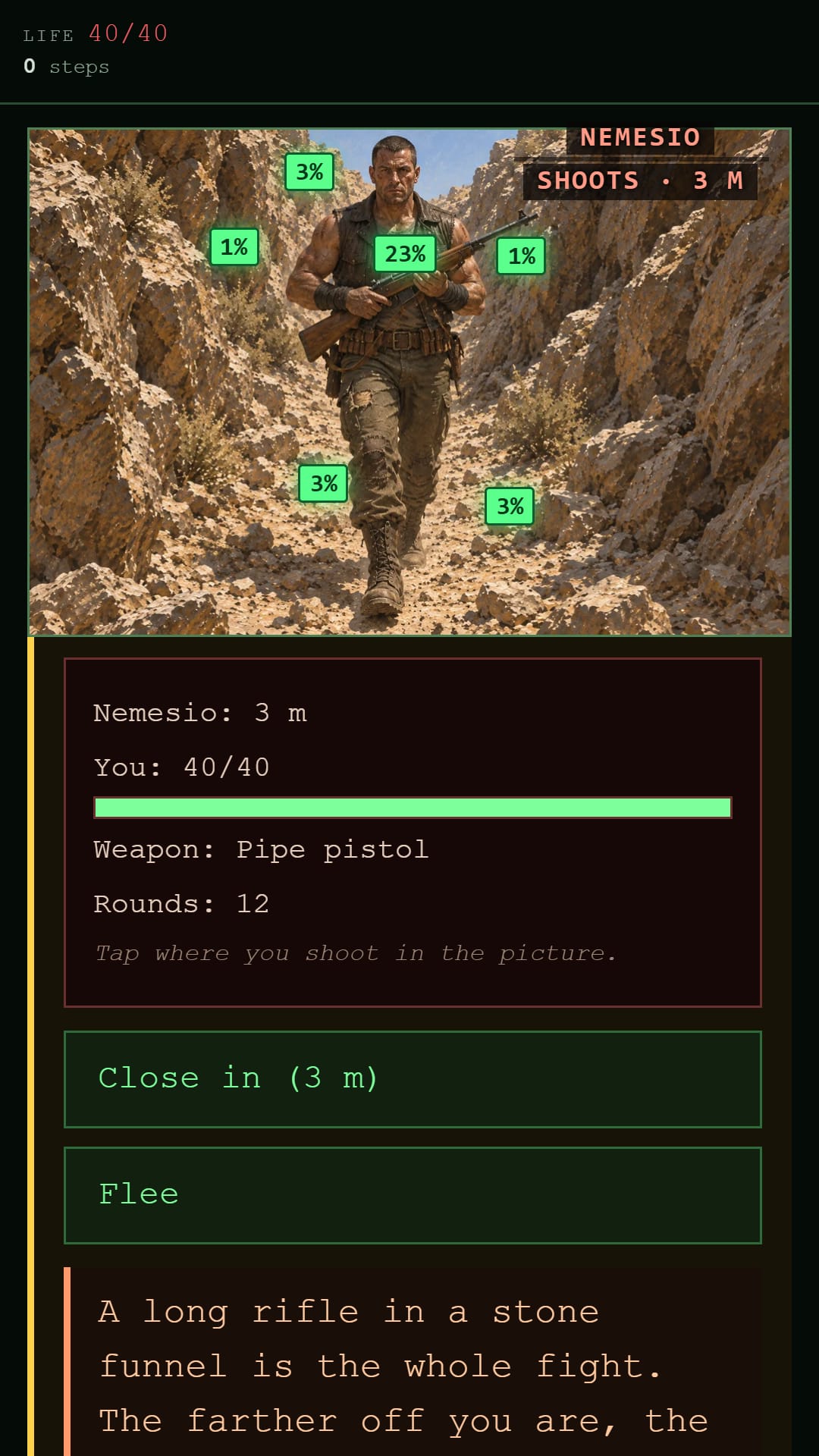
- Combat where you aim at body parts, with the hit chance for each zone on screen.
- Optional permadeath — if you fall, your save is wiped — for players who want every step to count.
- Characters with personality: the Cosmic Knight, a robot selling funeral insurance, Yara at the Scrap Market, or the village of La Junta.
Why it works as motivation to walk
A regular step app gives you a number. A game gives you a reason: “800 more steps and I reach the town” pushes harder than “6,200 of 10,000”. In DustFall the walk has consequences — getting somewhere sooner, being able to afford a longer route — and that turns a habit into something you want to do.
And because it’s a narrative game rather than a reflex game, it plays in short sessions: open it, spend the day’s steps, read what happens, decide, close it. It suits anyone who doesn’t want to spend hours glued to the screen.
Offline, no account
DustFall works fully offline and without an account. It needs no GPS and no data, so it plays the same in a village with no signal as in the middle of a city. It’s free on Android and iPhone, in English, Spanish, Portuguese and German.
For more screenshots and a look at the world, see the DustFall page.
Frequently asked questions
- What is a walking game?
- A mobile game that uses your real steps or movement as a resource: the more you walk in real life, the further you get in the game.
- Does DustFall need GPS or an internet connection?
- No. DustFall counts steps with the phone's pedometer and works fully offline, with no account.
- Do I need to keep the game open while I walk?
- No. Steps are counted in the background and banked; you spend them to travel the map whenever you open the game.
- How much does DustFall cost?
- It's free on Android (Google Play) and iPhone (App Store), in English, Spanish, Portuguese and German.