In Magic: The Gathering every card belongs to a type, and the type decides what it does and when you can play it. Understanding this is the foundation for avoiding rules mistakes. Let’s start with the most important concept: timing.
Sorcery speed vs. instant speed
- Sorcery speed: only on your turn, during one of your main phases, with the “stack” empty (nobody has a spell waiting to resolve). This is when you can cast most cards.
- Instant speed: at any time you have priority, even on your opponent’s turn or in response to another spell.
With that in mind, let’s go type by type. The ones that stay on the board when they resolve are called permanents (creatures, lands, artifacts, enchantments, planeswalkers). The ones that do their effect and go to the graveyard are the one-shot spells (instants and sorceries).
Lands
What they do: they produce mana, the energy you pay everything else with.
When: only one per turn, at sorcery speed. Playing a land doesn’t use the stack and can’t be responded to.

Creatures
What they do: they’re your attackers and blockers. They have two numbers, power/toughness (e.g. 4/4: deals 4, survives 4 damage).
When: sorcery speed. Also, a freshly summoned creature has summoning sickness: it can’t attack or use tap ({T}) abilities until it’s been under your control for a turn (unless it has haste).

Instants
What they do: a one-shot, direct effect. They resolve and go to the graveyard.
When: at any time, even on your opponent’s turn or in response. They’re the tool of reaction.

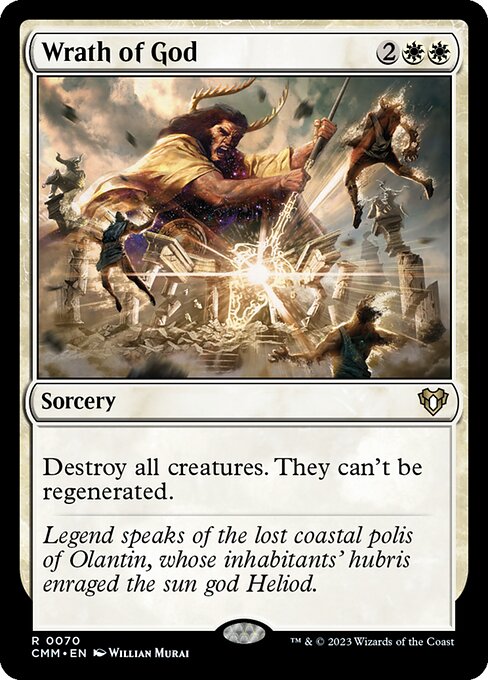
Sorceries
What they do: like an instant (one-shot effect, then to the graveyard), but more restricted in timing.
When: only at sorcery speed (your turn, empty stack).
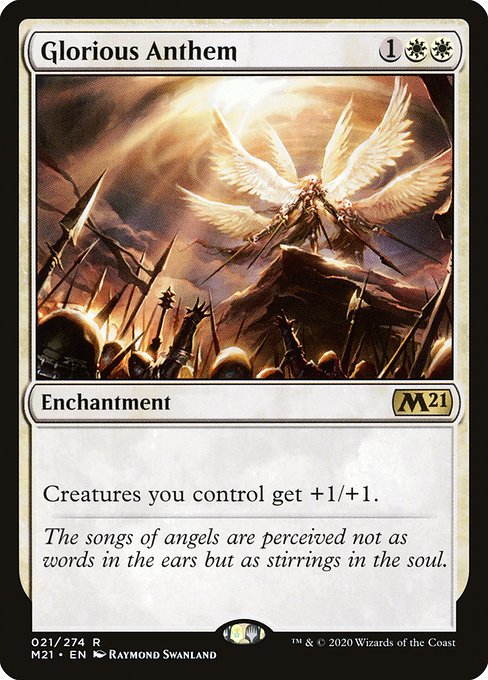
Enchantments
What they do: permanents with an ongoing effect while they’re on the board. A subtype, Auras, attaches to another card to buff or hinder it.
When: sorcery speed.
Artifacts
What they do: permanents representing objects (usually colorless). Many give mana or abilities; Equipment attaches to a creature to boost it.
When: sorcery speed.

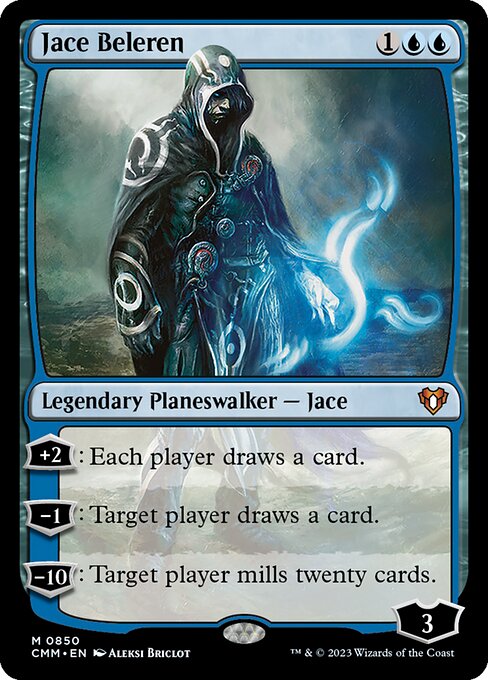
Planeswalkers
What they do: you summon a powerful ally with loyalty counters. Each turn you can use one of its abilities, which raise or lower that loyalty. If it hits 0, it dies.
When: cast at sorcery speed, and their abilities activate once per turn, also at sorcery speed. Your opponent can attack it with creatures to lower its loyalty.
Battle — the newest type
What they do: a shared permanent with defense counters that you attack to “defeat”; once it falls, it usually gives you a reward (for instance, casting the card on its back face).
When: sorcery speed. It’s a recent, still uncommon type, but worth knowing.
Quick summary: lands for mana, creatures to fight, instants to react, sorceries for effects on your turn, enchantments/artifacts for ongoing advantages and planeswalkers for allies that grow. Many of these cards also have abilities; we explain them in the abilities guide. And which of these cards you can actually put in a deck depends on the format you play: every Magic format compared.
Frequently asked questions
- How many card types are there in Magic?
- Eight: lands, creatures, instants, sorceries, enchantments, artifacts, planeswalkers and battles, the newest of the lot. The type is printed on the middle line of the card and it decides when you can play it and what happens when it resolves.
- What is the difference between an instant and a sorcery?
- The effect can be identical; what changes is when you can cast it. A sorcery can only be cast during your own turn, in a main phase, with an empty stack. An instant can be cast at any time, including during your opponent's turn or in response to another spell. Both resolve and then go to the graveyard.
- How many lands can you play per turn?
- One per turn, and only at sorcery speed: your turn, main phase, empty stack. Playing a land does not use the stack, so it cannot be responded to. A few specific cards let you play extra lands, but the default rule is one.
- Why can't my newly cast creature attack?
- Because of summoning sickness: a creature cannot attack or use abilities that require tapping it ({T}) until it has been under your control since the start of your turn. The exception is creatures with haste, which can attack the same turn they arrive.
Keep reading
-
Marvel: Darkhold Destiny, Magic's next Marvel set: release date and first cards
Wizards revealed the second Marvel set at New York Comic Con: Darkhold Destiny releases 9 April 2027, with its own original story, Hela, Magik and the Darkhold itself. Here are the first seven cards and the mechanics showing so far.
-
Ottawa Regional Championship: Kaya Gregg's winning decklist
Kaya Gregg won the F2F Tour Ottawa Regional Championship (2-4 October 2026) in Modern with Azorius Control and the Isochron Scepter plus Orim's Chant lock. Full decklist, maindeck and sideboard.
-
Fun 2-card combos for Commander and Casual
Eight pairs of cards that win the game with no help from anyone: which ones really win on their own, which only build the loop, and which need a third piece no matter what the internet tells you.
-
Baltimore Regional Championship: Pete Ingram's winning decklist
Pete Ingram won the SCG CON Baltimore Regional Championship (13 September 2026) in Modern with Mono-Green Broodscale. Full decklist, maindeck and sideboard.
-
Commander Brackets: what they are and how to calculate yours
Wizards put a number on the age-old question: is your deck a precon or a tournament build? The five Commander brackets, the four things that actually separate them, and how to calculate which one your deck falls into.
-
MagicNexus in depth: the app that logs everything at your table
Life counter, decks with levelling companions, worldwide ranking, tournaments and trades. We go through MagicNexus feature by feature: what it does, how it does it, and which playgroup it suits.
-
Commander decks: how many cards and how to build one
Short answer: exactly 100 cards, all different, and one of them is your commander. Here is everything else that changes compared to a normal game of Magic.
-
Reality Fracture: all 285 cards, out now
All 285 cards of the set released on 2 October 2026, plus the 87 new cards in Reality Fracture Commander: two new mechanics — Prepare and Empower Jace — Exhaust returning, Emrakul and Tarmogoyf returning, and planeswalkers in colours that aren't theirs.
-
Star Trek in Magic: the revealed cards and the shocklands
The 91 cards already revealed from the 13 November 2026 set, plus the 38 from Star Trek Commander: all ten shocklands return to Standard, the Federation against the Borg, Spacecraft with Station, and the Face a dilemma keyword.
-
Magic keywords: every keyword ability explained
Flying, trample, hexproof, prowess, ward… What each Magic: The Gathering keyword does and when it actually works. Sorted so you can find one mid-game.
-
Pro Tour Marvel Super Heroes: Yuuki Ichikawa's winning decklist
Yuuki Ichikawa won Pro Tour Marvel Super Heroes (19 July 2026, MagicCon Amsterdam) in Modern with Simic Neoform. Full decklist, maindeck and sideboard.
-
When does Standard rotate in 2026?
Short answer: there is no rotation in 2026. Wizards is moving it to the first set of the calendar year, so the next one is in 2027 and six sets leave at once.
-
Standard legal sets: what's in, what rotates and when
The full list of Standard legal sets with their release dates, the six leaving with the first set of 2027, and the ones joining over the next few months.
-
Magic: The Gathering formats, explained
The basic rules for Constructed and Commander (life, mulligan, poison, commander damage…) and each format with its rules and a beginner-friendly version.
-
Abilities in Magic: activated, triggered and keywords
The four ability types (activated, triggered, static and keywords) explained with examples and real cards: what they do and when they work.